Plato
“One of the penalties of refusing to participate in politics is that you end up being governed by your inferiors.”
Social media has been embraced by western politicians as both a marketing tool and a way to engage with their communities.
Through his 2008 and 2012 election campaigns, Barack Obama lead the way in using social media for campaigning, with the 2008 campaign being touted as the first ‘social media campaign’ (Enli 2017).
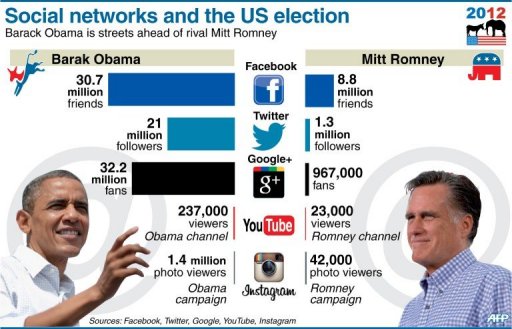
The audience of politically interested social media users continues to climb with the greatest reach amongst educated and younger generations (Owen, 2017). The affordances of social media enable political parties to broadcast messages to millions or use the targeting features to reach just their electorates, and their followers can respond. This ability to engage with politicians and political parties through social media gives digital citizens a chance for their voice to be heard.
Even after exiting office, Barack Obama continues to deliver strong and positive messages through social media. According to Pew Research, Barack Obama also maintains a greater following than any past or current President (Wojcik et al 2019). So it’s not surprising to see hashtags such as #bringbackobama gaining traction.
2016 saw a dramatic change in the political use of social media, which delivered trumpbots and a POTUS who uses Twitter to rant, attack opponents and the media and state outright lies like a petulant child.
Trump recently held a ‘social media summit’ at the White House, in which no representatives from any social media network were invited. Attendees instead included his conservative friends, known racists, anti-abortionists, extreme right-wing activists and conspiracy theorists (Marantz 2019).
A full transcript of the President’s remarks at the summit is available for reading. Rather than a serious discussion on the future of social media, Trump’s remarks focused on himself (naturally), the “unfriendly courts”, media, fake news, how social media wants to shut him down, comparing his follower numbers to tv ratings, the strength of the military, China and general whining that he and his followers are being picked on.
The research article ‘Is Facebook Making Us Dumber? Exploring Social Media Use as a Predictor of Political Knowledge‘, suggests that the rise in the number of people getting their political information from fake and soft news stories on social media, rather than credible and professional journalists, could have detrimental effects and contribute to a misinformed society. Tim Cook, CEO of Apple, further states that it is “killing people’s minds” (Cacciatore et al 2018).
The power of social media to influence and manipulate voters is further evidenced in an interview with hacker Andrés Sepúlveda in which he stated, “When I realised that people believe what the Internet says more than reality, I discovered that I had the power to make people believe almost anything” (Robertson et al 2016).
While this dark side of social media in politics can leave a bitter taste for any digital citizen, we can hope that the affordances of social media will inspire more strong and positive leaders to use it for good in the future. For example, Jacinda Ardern, Prime Minister of New Zealand, regularly uses the Facebook Live feature to personally address and engage with her followers.
References:
Cacciatore, M. A. et al. 2018 ‘Is Facebook Making Us Dumber? Exploring Social Media Use as a Predictor of Political Knowledge’, Journalism & Mass Communication Quarterly, 95(2), pp. 404–424.
Enli, G. 2017, ‘Twitter as arena for the authentic outsider: exploring the social media campaigns of Trump and Clinton in the 2016 US presidential election’, European Journal of Communication, 32(1), pp. 50–61.
Marantz, J. 2019, ‘Trump’s Very Big, Very Important White House Social-Media Summit’, The New Yorker, 11 July 2019, <https://www.newyorker.com/news/news-desk/trumps-very-big-very-important-social-media-summit>.
Owen, D. 2017, ‘The Oxford Handbook of Political Communication, pp. 12-13.
Obama, B. 2019 <https://www.facebook.com/barackobama/>.
Robertson, J. et al 2016, ‘How to hack an election’, Bloomsburg Businessweek, March 31 2016, <https://www.bloomberg.com/features/2016-how-to-hack-an-election/ >.
Wojcik, S. et al 2019, ‘About one in five adult Twitter users in the US follow Trump’ Pew Research, 15 July 2019, <www.pewresearch.org/fact-tank/2019/17/15/about-one-in-five-twitter-uses-in-u-s-follow-trump/>.
Images:
George Washington with Twitter bird [image], The Daily Dot, viewed 11 August 2019, <https://www.dailydot.com/unclick/top-founding-fathers-twitter/>.
Social networks and the US election [image], Phys.Org, viewed 11 August 2019, <https://phys.org/news/2012-10-obama-romney-social-media-face-off.html >.
 Rebecca Fairley
Hi Rebecca
Thank you for another great post – well written and enjoyable to read.
I like how you have focused on the interesting relationship between the use of social media in the recent political landscape, and the fact that we tend to believe everything we see online – it leaves us wide open to manipulation. While Trump calls most reports ‘fake news’, I do think the media stretches and manipulates many reports to make then sound better, to increase their own ratings – but not necessarily fake news. Further to this is that hackers, like Andres you mentioned, has the realisation that by reporting something – anything – he can make people believe what he wants. I think this is a really important and dangerous wake-up call for us: not everything we hear is entirely true and completely accurate. This reminds me of a 1st-year Communication unit I did a few years back – that we can only rely on credible sources. Even then, you need to verify what you hear by checking multiple credible sources for the truth. While we can say this and know it, a large part of the population doesn’t. So yes, I think “Facebook is making us dumber”, and as individuals, we need to take more responsibility for what we choose to believe, and need to really think and listen for the truth, and not what the media wants us to hear: there are two sides to every story.
Michael
LikeLike
Hi Bec, another great post to add to your bog! This is a very interesting topic and its ability, when doing some research, for it to take us in so many different directions is quite intriguing. Social media platforms, in particular, YouTube is designed to catch us and not let us go. How many times I’ve found myself opening a social media platform for one specific thing for it than to lead into watching or reading something else, and before you know it, it’s been an hour of thumb scrolling and video watching! Propaganda seems to continuously pop its head around every corner when it comes to social media, and the issue of using social media for political campaigns is that it’s susceptible to spreading disinformation. On the other hand, social media has been an incredible platform for the younger generations to create a political identity (Wooley 2016). The democratic and political potential of social media is something to watch, let’s all stay tuned and see where it takes us.
Woolley, S, Howard P 2016, International journal of communication, Political communication, computational propaganda, and autonomous agents.
LikeLike
Hi Bec!
Interesting and insightful conversation surrounding the relationship between politics, social media, and the public here.
One of many comments that caught my attention was that Trump uses Twitter to “state outright lies like a petulant child.” According to fact checkers at the Washington Post, Trump has “made 12,019 false or misleading claims” during his time in office so far (Fact Checker, 2019). However, it is clear that his propaganda resonates with some people. Let’s consider his consistent criticism of the media, for example, his tweet calling the media “the enemy of the people,” his complaints that the media is biased against him, and, of course, his coining of the term “fake news.” Research by The Pew Research Centre found that “half of [American] adults consider ‘fake news’ a major problem” and “people who identified themselves as Republican Party members were more likely than Democratic Party members to blame reporters for the problem” (Musto, 2019). Perhaps this study insinuates that whilst one Twitter user may consume Trump’s text and dismiss it like you did, others may consume and believe it. To me, this highlights the power of social media, particularly in politics, as the messages shared on the platforms have serious consequences which may misleadingly inform and influence the beliefs and political stances of its audiences, even if the content is not always factual.
Keep it up Bec!
LikeLike