Exploring social media and its dominance in our daily lives
MDA20009: Digital Communities – Assignments 1A, 1B and 1C

Exploring social media and its dominance in our daily lives
MDA20009: Digital Communities – Assignments 1A, 1B and 1C
When I think of gaming, I first picture the hard-core pc and console players who spend hours playing games like Minecraft, Grand Theft Auto and Final Fantasy, so their transition to online massive multiplayer games, like the ever popular World of Warcraft, seems quite natural. It’s an opportunity to expand a pastime they love, create a social connection and share the experience with more people.
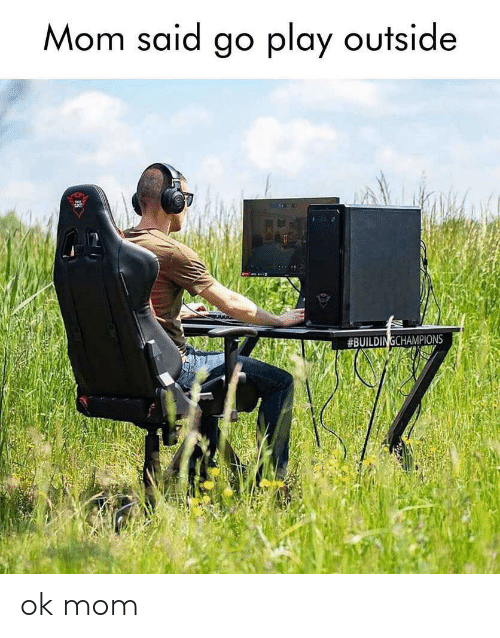
Studies indicate that online gaming can afford not just entertainment, but also social aspects, such as meeting other like-minded players, building friendships and relationships and exploring various modes of socialising (Quandt & Kroger 2013 pp. 58-60). A recent Facebook report found that 49% of 18-34 year old gamers would be more inclined to continue playing if they felt they were part of a community.
Personally, I’ve never been much of a gamer. While I enjoyed occasionally playing Super Mario and Donkey Kong, my only use of social gaming was a short-lived fondness for Words with Friends. It was a fun way to wake the brain up on my commute to work, but the novelty soon wore off with the increase of creepy types trying to flirt or the ones who would quit mid game because they didn’t like being beaten by a girl.
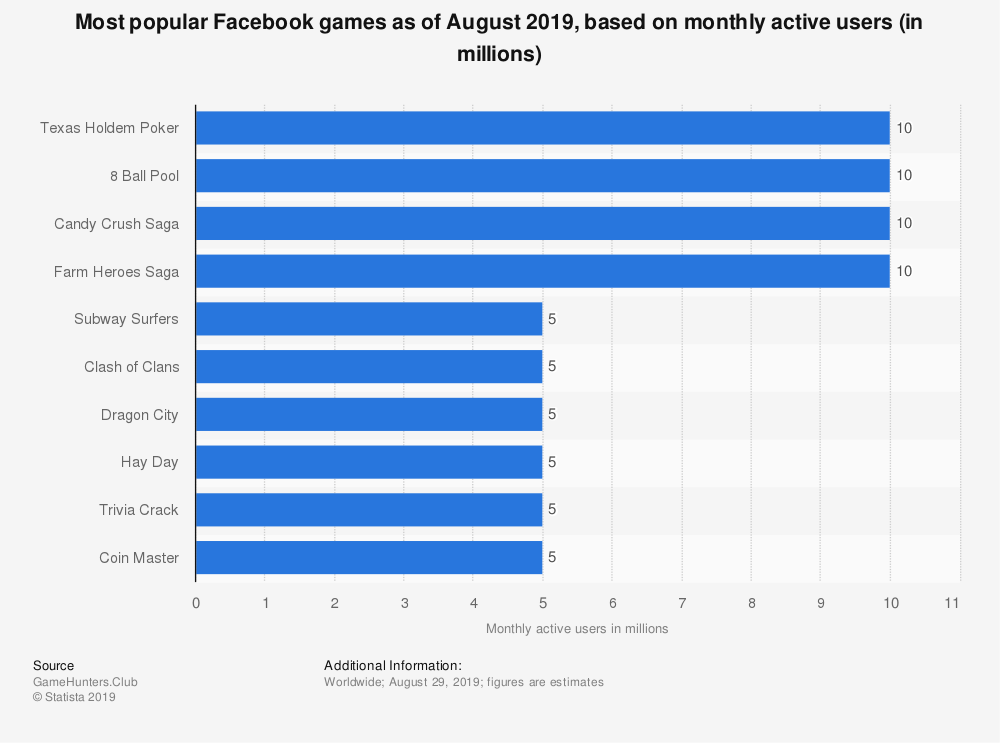
When Facebook opened up the doors to developers in 2007, a new form of social gaming appealing to diverse demographics flooded in. Some of the first popular and free to play smartphone and social media games were Farmville, YoVille and Mafia Wars. One of the most popular today is Candy Crush with over 10 million daily active users (Gough 2019). According to Think Gaming, Candy Crush rakes in over $1.5 million daily from in app purchases.
While there are some social benefits to casual gaming, studies suggest that excessive online gaming or gaming addiction can lead to stress, isolation and in extreme cases, aggression, financial loses and impacts on real life work and personal relationships (Griffiths 2013) .
Candy Crush has come under criticism with reports saying that Candy Crush addiction is real, articles on why people are so attracted to it, there’s even blogs on recovery and seeking help.
A research project for the Journal of Gambling Studies found significant similarities between Candy Crush and slot (Pokie) machines. The study which measured both physiological and psychological reactions concluded that impacts of near misses/losses experienced by game players was the same as those of slot machine users, arousing the urge to keep playing (Larche et al 2016).
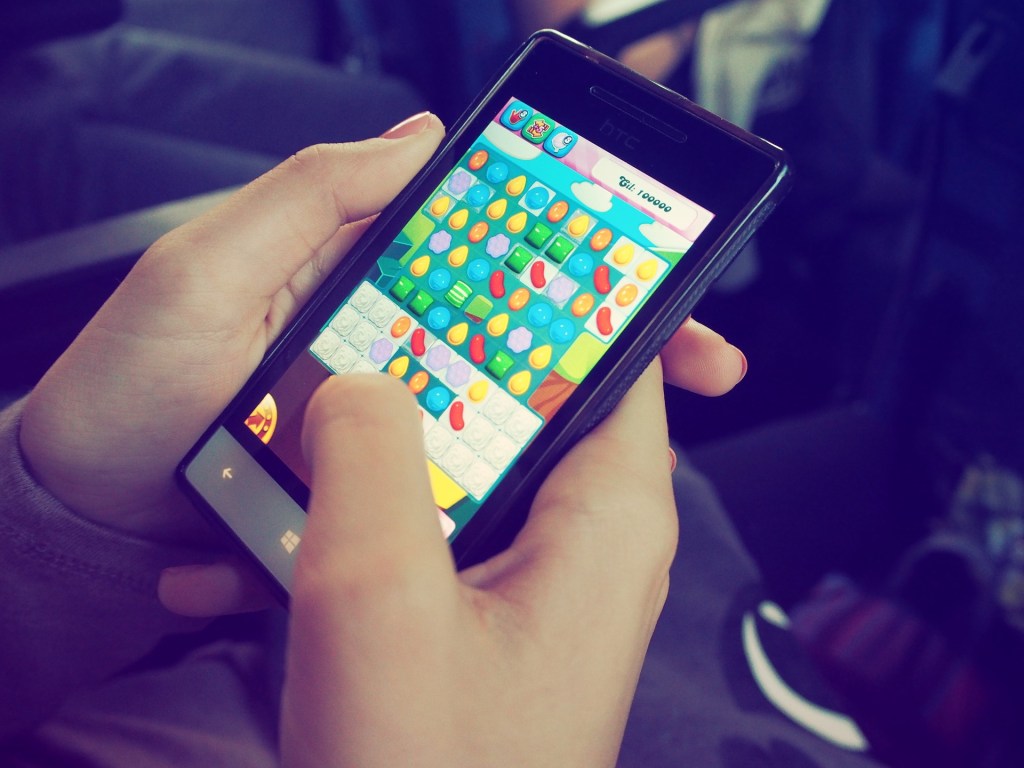

It’s not surprising when the game looks like holding a mini slot (pokie) machine in your hand.
References:
Gough, C. 2019, ‘Most popular Facebook games as of May 2019, based on number of
daily active users’, Statista, August 2019, <https://www.statista.com/statistics/267003/most-popular-social-games-on-facebook-based-on-daily-active-users/>.
Griffits, D. 2013, ‘An Overview of Online Gaming Addiction’ in Multiplayer :
The Social Aspects of Digital Gaming, Routledge, London. Available from:
ProQuest Ebook Central, viewed 20 September 2019.
Larche, C.J., Musielak, N. & Dixon, M.J, 2017, ‘The Candy Crush Sweet
Tooth: How ‘Near-misses’ in Candy Crush Increase Frustration, and the Urge to
Continue Gameplay’, Journal of Gambling Studies, June 2017, Vol 33, Issue 2,
pp. 599-615, < https://doi.org/10.1007/s10899-016-9633-7>.
Quandt, T, & Kröger, S 2013, Multiplayer : The Social Aspects of Digital
Gaming, Routledge, London. Available from: ProQuest Ebook Central, viewed 20
September 2019.
Social Gaming, 2019, CollinsDictionary.com, <https://www.collinsdictionary.com/dictionary/english/social-gaming>.
Images:
Candy Crush Device [Image], 2015, in Pixabay, Pexels, <https://pixabay.com/photos/candy-crush-device-electronics-game-1869655/>.
Mom said to go outside Meme [Image], in MEME, <https://me.me/i/mom-said-go-play-outside-ok-mom-98b400f8aad84a169ee57aa8be44311e>.
Morpheus Meme [Image], d?, in Quickmeme, <http://www.quickmeme.com/p/3vvh8w>.
Slot Machines [Image] 2014, in Pixabay, <https://pixabay.com/photos/casino-game-of-chance-slot-machines-3260372/>.
Video game controller [Image], 2017, in Pixabay, Javier, R. <https://pixabay.com/vectors/video-game-videogames-control-gamer-2154473/>.

I’m sure most internet users have at least once experienced lying in bed feeling worse than you’ve ever felt in your life. Fever running high, coughing, sneezing, your body producing more snot and mucus than you thought humanly possible. In desperation, you reach over to your trusty mobile and start googling your symptoms, only to have Dr Google exacerbate your anxiety and convince you that ‘this is it’.
After some much needed rest, most will shake off our foolhardy flu fog and swear to never call Doctor Google again. However, similar to Hypochondria, some people become so obsessed with googling their symptoms that they develop a serious disorder dubbed Cyberchondria or Google-itis (Thompson 2014 p. 292).

Crowdsourcing can be defined as “the practice of obtaining needed services, ideas, or content by soliciting contributions from a large group of people and especially from the online community rather than from traditional employees or suppliers” (Merriam Webster 2019).
In relation to crowdsourcing in terms of disaster relief, Mark Riccardi’s journal article on this subject (2016) further defined crowdsourcing as “using the power of the Internet and social media to “virtually” harness the power of individuals and bring them together in support of a disaster”.
Continue reading “Crowdsourcing in times of crisis”
This week’s post is all about trolls. No, not the nasty ugly monsters we read about in fairy tales, but the new breed that are the bane of social media.
Continue reading “Social Media Trolls”
Activism: Noun
“the doctrine or practice of vigorous action or involvement as a means of achieving political or other goals, sometimes by demonstrations, protests, etc” (dictionary.com)
Digital activism takes the principals of the traditional definition of activism above, but uses digital tools such as smartphones, the internet, social media, blogging and online petitions sites like Change.Org, MoveOn.org and GetUp.org.au.
Continue reading “Digital activism and protest”
Plato
“One of the penalties of refusing to participate in politics is that you end up being governed by your inferiors.”
Social media has been embraced by western politicians as both a marketing tool and a way to engage with their communities.
Through his 2008 and 2012 election campaigns, Barack Obama lead the way in using social media for campaigning, with the 2008 campaign being touted as the first ‘social media campaign’ (Enli 2017).

Firstly, what are affordances?
Don Norman (2011) says affordance “refers to the properties of an object and the person. It’s the relationship between the person and the object and what that person can do with the object”. Udacity (2015) released the video below to illustrate how affordances and limitations affect the relationship between object and person.

In order to answer this question, it’s important to understand the differences between a blog and a social network site.
Continue reading “Is WordPress a blog or a social network site?”
 Rebecca Fairley